

News
 Back to news
What is CNC Machining?
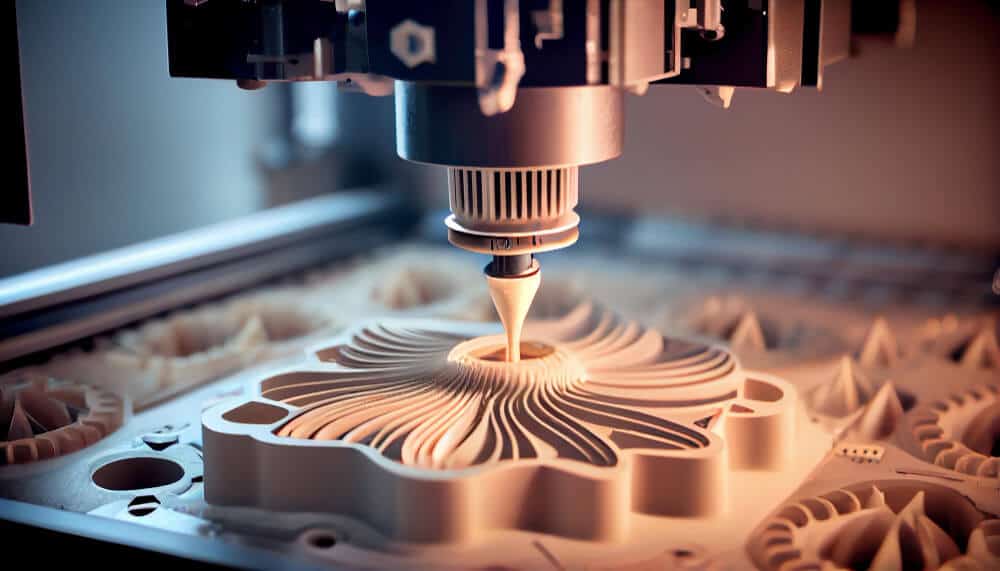
Walk into any advanced manufacturing facility today, and you’ll see machines performing delicate, complex tasks with almost surgical accuracy. No more guesswork, no more manual tweaks—just pure, programmed precision.
This isn’t science fiction; it’s CNC machining. Whether cutting metal for aerospace parts or shaping tiny components for medical devices, CNC technology is the quiet force driving innovation forward. But what exactly is CNC machining, and why has it become the gold standard in modern industry?
What is CNC Machining: Understanding the Fundamentals
CNC stands for Computer Numerical Control. It’s a manufacturing method that uses pre-programmed computer software to control the movement of tools and machinery. Instead of relying on manual operation, CNC systems automate cutting, drilling, milling, and other tasks with high precision.
The concept transformed manufacturing by replacing hand-operated machines with digital instructions. This shift brought not only better accuracy but also repeatability, allowing manufacturers to produce complex parts quickly and consistently. Whether it’s a one-off prototype or a mass production run, CNC makes it possible to achieve the same level of quality every time.
How CNC Machines Function: The Technical Process
The CNC process starts long before the machine begins to move. It begins with a digital blueprint—typically a CAD (Computer-Aided Design) file—that defines the part’s dimensions and geometry. This file is then translated into a language the CNC machine understands, called G-code. G-code acts like a set of instructions, telling the machine exactly where to move, how fast, and how deep to cut.
Once programmed, the CNC machine takes over. Motors and sensors drive precise tool movements along multiple axes, shaping the material according to the design. The operator’s role is mostly supervisory—monitoring progress, making sure everything runs smoothly, and performing quality checks.
This computer-controlled process eliminates human error and allows for incredibly tight tolerances, making it ideal for industries that demand exacting standards.
Types of CNC Machines in Today’s Industry
CNC technology isn’t one-size-fits-all. There are several types of CNC machines, each designed for specific tasks and materials. Here are the most common types in use today:
- CNC Milling Machines – These machines use rotary cutters to remove material from a workpiece. They’re ideal for creating complex shapes and parts with tight tolerances.
- CNC Lathes – Lathes spin the material while cutting tools shape it. They’re commonly used for cylindrical parts like shafts, pins, and bushings.
- CNC Routers – Similar to milling machines but typically used for softer materials like wood, plastic, and foam. Routers are popular in sign making and prototyping.
- CNC Plasma Cutters – Use a high-velocity jet of ionized gas to cut through electrically conductive materials like steel and aluminum.
- CNC Electric Discharge Machines (EDM) – These machines remove material using electrical discharges and are excellent for intricate work with hard metals.
- CNC Laser Cutters – These offer extremely precise, clean cuts using focused laser beams. Laser cutting machines are especially useful in applications requiring high detail and minimal material distortion.
Each machine type brings different strengths to the table, and manufacturers often use a combination to meet various production needs.
Key Benefits of Precision CNC for Manufacturing Excellence
CNC machining isn’t just about making things—it’s about making them better, faster, and more reliably. Here’s why manufacturers across industries rely on CNC for high-performance production:
- Precision and Consistency – CNC machines follow exact digital instructions, delivering repeatable accuracy that manual processes simply can’t match.
- Efficiency – Once programmed, CNC systems can run continuously with minimal supervision, speeding up production and reducing downtime.
- Cost Savings Over Time – Although the upfront investment in CNC technology can be high, the long-term benefits—like reduced waste, fewer errors, and faster cycles—translate to lower overall production costs.
- Scalability – Whether producing one prototype or thousands of parts, CNC offers a seamless path from concept to mass production.
- Complex Capabilities – From intricate geometries to micron-level tolerances, CNC makes it possible to manufacture parts that would be nearly impossible by hand.
In short, CNC machining gives manufacturers a competitive edge by combining speed with precision—an essential combination in today’s fast-paced industries.
CNC Applications Across Multiple Industries
CNC technology powers innovation across a wide range of sectors. Its ability to deliver high-precision parts quickly and reliably makes it indispensable in industries where there’s zero room for error.
- Electronics – From intricate housings to micro components, CNC machines are used to manufacture high-density, precision parts for circuit boards and consumer electronics.
- Medical – Surgical tools, implants, diagnostic equipment—all benefit from CNC’s ability to work with biocompatible materials at micron-level precision.
- Aerospace – The industry demands lightweight, high-strength parts with exact tolerances. CNC machining delivers components for turbines, engine parts, and structural elements.
- Automotive – CNC is used for engine blocks, transmission parts, and custom performance components, helping improve reliability and performance.
- Defense and Military – When mission-critical reliability matters, CNC enables the production of parts for weapons systems, surveillance gear, and secure communications devices.
At Admati, we focus on these high-demand industries, combining advanced CNC capabilities with deep sector expertise to deliver components that meet strict quality and compliance standards.
Materials and Capabilities: What CNC Technology Can Achieve
CNC machines handle a wide variety of materials—metals, plastics, ceramics, and composites—with impressive precision. They can shape complex geometries, achieve micron-level tolerances, and deliver consistent results at any scale. Whether it’s a polished finish or an intricate internal structure, CNC technology makes it possible to turn demanding designs into high-performance parts.
Why Choose Admati Agencies for Your Precision CNC Needs?
Admati brings together advanced precision CNC technology with deep industry expertise in sectors like semiconductors, medical, and defense.
Our equipment is built for high-precision work, our team understands complex manufacturing challenges, and our quality control is uncompromising.
Whether you need micromachining, tight tolerances, or scalable production, Admati delivers the accuracy, reliability, and speed that modern manufacturing demands.
More News Articles