

News
 Back to news
What Is NPI? Transitioning from Development to Manufacturing in Industry
In industry, the NPI process (short for New Product Introduction) bridges the gap between the development stage and serial production. Without an organized process, the transition from development to manufacturing can lead to malfunctions, delays, and high costs.
What Is NPI?
NPI is a structured process aimed at transferring a product from the development stage to the manufacturing stage in a controlled manner, through planning, testing, documentation, and full preparation of the production line to absorb the new product.
An NPI engineer coordinates the work between the development, procurement, manufacturing, and quality control departments. Their role is to ensure that successful development translates into a product that can be manufactured in series, on time and within the designated budget. An NPI engineer works with all relevant parties to ensure there are no gaps between what the developers designed and what the production line is capable of delivering.
The NPI process is relevant to any new product, but is essential primarily in industries where a small mistake can be very costly. In manufacturing fields such as electronics, medical devices, or semiconductors, a structured NPI process is a basic requirement for the product’s success in the market.
Why Is an Organized Process Required for Transitioning from Development to Manufacturing?
After developing a product in the lab, it works under controlled conditions. When transferring it to a production line, the conditions change entirely. Raw materials come from different suppliers, the equipment is different, and the volumes are larger. The gap between environmental conditions creates challenges that require advance planning.
Without an organized NPI, companies discover problems only when the production line is already running. At that stage, every fix costs much more. Shutting down a production line for one day can cause losses of tens of thousands of shekels and even more.
Risks of an unorganized NPI:
- Mismatch between product design and manufacturing capabilities
- Quality issues discovered only at the serial production stage
- Schedule delays and unexpected costs
- Supply chain failures for components and sub-systems
An organized NPI process reduces risks thanks to the ability to identify problems at an early stage, before they become expensive to fix.
Stages of the NPI Process
The NPI process is carried out in several stages. Each stage must be executed based on the previous one, and before moving to the next stage, a review of all criteria must be conducted to ensure it is possible to continue.
Receiving Engineering Documentation and Feasibility Assessment
In the first stage, engineering drawings, material specifications, and performance requirements are received. The engineering team reviews the documentation and assesses whether the product can be manufactured with available technology and at a reasonable cost. At this stage, supply or cost gaps are also identified and bridged.
Building a Prototype and Testing
In the second stage, a prototype simulating the final product is built. The prototype undergoes functional, mechanical, and environmental tests. Test results lead to corrections and improvements in the design. Sometimes several prototype iterations are required before reaching a satisfactory result.
Pre-Serial Production and Validation
After the prototype passes all tests, a small series of products is manufactured to check whether the production process is stable and repeatable. Each product in the series is verified to meet the same specifications. Only after full approval of all parameters does the transition to full serial production take place.
Prototype: Is There Engineering Feasibility for Manufacturing?
The prototype stage in the NPI process allows identifying design issues before investing in a full production line. It costs much less to make a change in a drawing at the prototype stage than after serial production has begun.
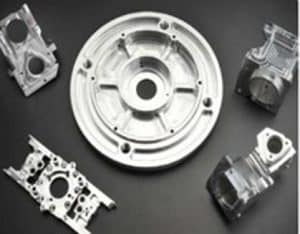
The prototype should be built using the same manufacturing processes that will operate during serial production. For example, when performing CNC machining of metal components at the prototype stage, it is possible to examine whether the design suits the final manufacturing process and ensure there are no gaps.
In addition, this stage should be used to examine the supply chain. It is verified that all components required for serial production are available in quantities and delivery times that match the production schedule.
What is examined at the prototype stage:
- Match between the design and manufacturing capabilities
- Compliance with required specifications and standards
- Availability of raw materials and components
- Identification of weak points requiring improvement
Documentation, Quality, and Compliance with Standards
Organized engineering documentation is an integral part of the NPI process. Drawings, material specifications, assembly instructions, test plans, and quality control procedures must be documented. Without complete documentation, the production line struggles to operate consistently.
In sensitive industries such as medical devices, defense equipment, or semiconductors, compliance with international standards is an essential requirement. In every NPI process, it is mandatory to verify that the product and manufacturing process meet the relevant regulatory requirements. Standards such as ISO 13485 for medical devices or AS9100 for aerospace require full documentation of every stage in the process.
NPI Processes in Advanced Industries
NPI processes are common in industries where a high level of precision is required in manufacturing components and products. End products that have not undergone an organized NPI may be rejected in regulatory inspections or fail in the field.
In the semiconductor industry, for example, every component must meet stringent standards of precision and reliability. Therefore, HTOL tests (exposure to high temperatures), failure analyses, and validation of every manufacturing stage are performed. Even small components such as electrical connectors or pogo pins must go through all approval stages.
In the medical device industry, NPI processes also include submitting documentation to regulatory bodies such as FDA or CE. Every change in the product requires documentation and re-approval. The purpose of the process is to ensure all requirements are met before products reach the market.
Admati Agencies – Manufacturing with an Organized NPI
Admati Agencies operates in the field of components and sub-systems for advanced industries. We support NPI processes from the prototype stage through serial production, using precise manufacturing solutions and advanced components such as pogo pns for circuit testing. Our experience working with sensitive industries allows us to accompany complex projects and provide a fast and accurate response at every stage of the manufacturing process.
Questions and Answers About the NPI Process
How long does an NPI process take?
The duration of the NPI process depends on the complexity of the product and the industry. Simple products can transition from development to manufacturing within a few weeks, whereas medical or defense products require a process lasting months. In addition, products requiring regulatory approval take more time.
What is the difference between NPI and NRE?
NPI is the overall process of transitioning from development to manufacturing. NRE (short for Non-Recurring Engineering) is a term referring to one-time engineering costs required in the process, for example for building molds, dedicated tools, or test programs.
Should NPI also be performed for changes to an existing product?
Yes. When making an engineering change to a product that has already transitioned to manufacturing, a similar process on a smaller scale is required. The change must undergo testing and validation to ensure it does not compromise the quality or performance of the product.
Who is responsible for the NPI process in an organization?
Typically, NPI engineers coordinate the process by working with the development, procurement, manufacturing, and quality control departments. In smaller organizations, a project manager or production manager fills this role.
What are the risks involved in skipping the NPI process?
Transitioning to manufacturing without an NPI process can cause production malfunctions leading to the rejection of entire series, non-compliance with standards, and significant schedule delays. The cost of fixing problems at the manufacturing stage is much higher than the cost of an organized NPI process.
In which industries is it common to perform NPI processes?
NPI processes are common primarily in the manufacturing of electronic components and products, semiconductors, and medical devices, as well as in aerospace and defense. It is an essential process in any industry where a high level of quality and controlled manufacturing is required.
More News Articles