

News
 Back to news
AS9100 Explained: Requirements and Certification Process
Introduction
AS9100 is the international quality management standard required for suppliers in the aerospace, space and defense industries. Organizations that wish to supply components or services to these industries must comply with its requirements.
What is AS9100?
AS9100 is an international quality management system (QMS) standard developed by the International Aerospace Quality Group under the sponsorship of SAE International.
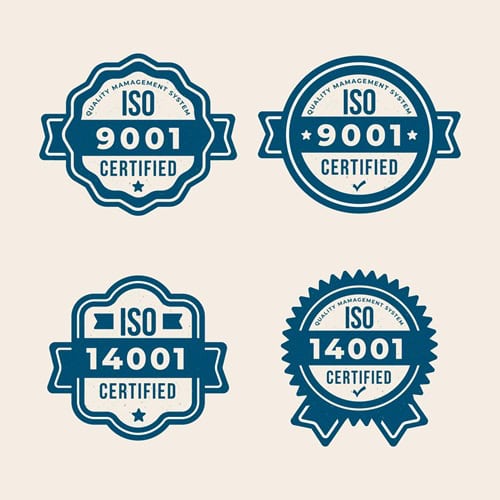
It is based on ISO 9001 but adds approximately 80 additional requirements tailored specifically to the aerospace industry.
The current version of the standard is AS9100 Rev D (published in 2016), aligned with ISO 9001:2015.
There are three related standards:
- AS9100 – for manufacturing and service organizations
- AS9110 – for maintenance, repair and overhaul (MRO)
- AS9120 – for distributors
Who Needs AS9100 Certification?
Any organization supplying products or services to aerospace, space or defense industries is typically required to comply, including:
- Manufacturers of mechanical and electronic components
- CNC machining and precision manufacturing providers
- PCB manufacturers and electronics suppliers
- Laser cutting and advanced material processing companies
- Subcontractors in defense and aerospace supply chains
Major companies such as Boeing, Airbus and Lockheed Martin require their suppliers to be AS9100 certified.
AS9100 vs ISO 9001
AS9100 includes all ISO 9001 requirements but adds additional layers specific to aerospace challenges.
Organizations already certified to ISO 9001 typically expand their existing system rather than rebuild it.
Additional AS9100 requirements include:
- Formal risk management across the entire supply chain
- Strict change management processes
- Prevention of counterfeit parts
- Enhanced supplier evaluation and control
Key Requirements of AS9100
AS9100 focuses on several core areas to ensure consistency and reliability:
Organizational Context and Risk Management
Companies must identify stakeholders, define their operational context and implement structured risk management processes.
Process Planning and Control
All production processes must be documented, controlled and traceable. This includes configuration management and full lifecycle documentation.
Control of Nonconforming Products
Clear procedures must be defined for identifying, isolating and handling defective parts.
Measurement, Analysis and Improvement
Organizations must collect data, analyze performance and continuously improve processes, including customer satisfaction tracking and failure analysis.
AS9100 Certification Process
Certification is a structured process with several stages:
Gap Analysis
Evaluate current processes against AS9100 requirements.
QMS Implementation
Develop procedures, train employees and implement quality controls.
Internal Audit
Conduct internal audits to identify and close gaps.
Certification Audit
Performed by accredited bodies such as Bureau Veritas, SGS or TÜV:
- Stage 1 – documentation review
- Stage 2 – operational audit
Certification and Maintenance
Certification is granted after successful audits and requires ongoing annual surveillance audits.
Benefits of AS9100 Certification
Organizations certified to AS9100 report clear business advantages:
- Access to aerospace and defense markets
- Reduction in defects and production errors
- Improved efficiency and process control
- Increased credibility with customers
- Stronger positioning in competitive tenders
About Our Services
We have decades of experience working with clients in aerospace, defense and space industries.
Our AS9100-certified processes ensure consistent delivery of precision components and subassemblies that meet strict industry requirements.
Contact us to learn how our services can support your project.
FAQ
What is AS9100?
AS9100 is a quality management standard for aerospace, defense and space industries, based on ISO 9001 with additional industry-specific requirements.
What is the difference between AS9100 and ISO 9001?
AS9100 includes ISO 9001 requirements plus additional controls such as risk management, configuration management and counterfeit part prevention.
How long does certification take?
Typically several months to a year, depending on the organization’s readiness.
What is the current version of AS9100?
AS9100 Rev D (2016), aligned with ISO 9001:2015.
Do all suppliers need AS9100?
Not always, but critical suppliers are usually required to be certified.
Does AS9100 apply to software?
Yes, organizations developing aerospace-related software must comply with relevant requirements.
Can you work with non-certified suppliers?
In some cases, yes, but critical components usually require certified suppliers.
More News Articles