

News
 Back to news
What is a PCB? An Engineering Perspective on Printed Circuit Boards
A printed circuit board (PCB – Printed Circuit Board) is the physical foundation of every electronic system. Whether it’s a smartphone, a medical device, or an industrial control system, the PCB is the component that enables all parts to communicate and operate together. Below is a comprehensive explanation of PCB from an engineering perspective.
What is a PCB?
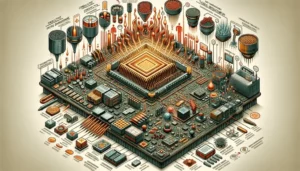
PCB is a printed circuit board, a board that serves as the physical and electrical infrastructure for electronic components. A PCB contains conductive traces (usually made of copper) that connect the various components and allow them to transmit electrical signals between them. Instead of connecting components with separate wires, a printed circuit board is an organized, compact, and reliable solution.
The basic structure of a PCB includes a base layer (Substrate) typically made of FR-4, a composite material of fiberglass and epoxy resin with good insulating properties, copper layers that form the conductive traces, a solder mask whose purpose is to protect the conductive paths and prevent shorts, and a silkscreen layer that marks component locations. Together, these layers create the infrastructure on which all electronic components are assembled.
There are different types of printed circuit boards for different needs. Single-sided PCBs are suitable for simple systems, double-sided boards enable higher component density, and multilayer boards are used for manufacturing complex systems that require advanced signal routing. In addition, there are flexible boards (Flex PCB) that allow adaptation to complex shapes, as well as rigid-flex boards (Rigid-Flex) that combine the advantages of both types.
The Role of PCB Within an Electronic System
Printed circuit boards perform several critical roles in every electronic system. The first and most obvious role of a PCB is conducting signals between the various components in the electrical circuit. The traces on the board carry digital and analog signals, enable communication between components, and ensure the entire system operates as intended.
Another role of a PCB is supplying power to components. The board contains power traces that carry voltage from the supply to each component in the system. The conductive and power paths must be designed carefully so the system operates stably without voltage drops. In particularly sensitive components, poor power routing can cause noise and interference in operation.
Key roles of a PCB in an electronic system:
- Transferring electrical signals between components.
- Providing all components with power from the supply.
- Mechanical stabilization and providing a stable physical base for all components.
- Logical organization of components to enable maintenance and testing.
- Placement of heat-generating components for efficient thermal management of the system.
Why Use Printed Circuit Boards?
Before PCB technology developed, electronic systems were built using manual wiring. Each component was connected to another using separate wires. This was a slow, expensive method with a clear potential for failures. Printed circuit boards solved all of these problems and turned electronic manufacturing into what it is today.
The main advantage of PCB is the high level of precision. The traces on the board are produced in a controlled and uniform process, so every board is manufactured exactly the same. Precision is an essential attribute, especially in sensitive systems where a small deviation can cause failures. In addition, PCB technology enables repeatability and consistency, meaning thousands or millions of identical boards can be produced at consistent quality.
Advantages of using printed circuit boards:
- High precision in manufacturing and component placement in systems.
- Long-term reliability under different operating conditions.
- Perfect repeatability in mass production.
- Requires less space compared to manual wiring (enables system miniaturization).
- Lower manufacturing cost at larger quantities.
The cost of producing a single PCB unit drops significantly as more boards are produced. Printed circuit boards reduced the cost of manufacturing electronic products and, as a result, their market price, which led to the spread of the technology into all areas of life.
General Engineering Considerations in PCB Design
PCB design is a complex engineering process that requires addressing multiple parameters at the same time. The first consideration is component density on the printed circuit board. The more complex the system, the more components must be integrated into a limited area. It is important to find the balance between board size, number of layers, and routing complexity.
Thermal management is another critical consideration. Electronic components generate heat during operation, and if the heat is not dissipated properly, it can cause failures and shorten system lifespan. Proper PCB design includes using copper layers for heat spreading and strategic placement of heat-generating components. The board can also include thermal vias or heat sinks.
Electromagnetic interference (EMI) is another challenge. High-speed signals can interfere with nearby components or be affected by external interference. Professional PCB design includes using ground layers, controlled routing of sensitive signals, and separation between digital and analog circuits. In communication and radar systems, these considerations are especially critical.
Key considerations in printed circuit board design:
- Component density: balancing board size with system complexity.
- Thermal management: efficient heat dissipation in the board to prevent overheating.
- EMI interference: preventing interference between components and circuits on the PCB.
- Reliability: selecting materials and manufacturing processes so the board and system remain durable over time.
Common Applications of Printed Circuit Boards
Printed circuit boards are found in nearly every electronic device. In consumer electronics, they appear in phones, computers, televisions, and household appliances. In communications, PCBs are the basis for networking equipment, cellular base stations, and satellite systems.
In the automotive industry, printed circuit boards are a central part of engine control systems, safety systems, infotainment systems, and autonomous driving systems. Requirements in the automotive field are especially high due to harsh conditions including wide temperature ranges, vibrations, and strict reliability requirements.
In the medical industry, PCBs are found in diagnostic devices, monitoring equipment, imaging devices, and even medical implants. Requirements in the medical field include extremely high precision, absolute reliability, and compliance with strict standards such as ISO 13485. In defense and aerospace industries, requirements are similar, with additional needs for resistance to extreme conditions, radiation resistance, and reliability in hostile environments.
When Is a Professional PCB Solution Required?
Not every electronic system requires the same level of design and manufacturing. For producing simple systems that are not intended to operate under extreme conditions or support human life, standard solutions may be sufficient. However, when dealing with complex or critical systems, a professional and tailored solution is required, including meticulous PCB design, appropriate material selection, and strict quality control.
For example, consider the medical device field. An ultrasound device, for instance, contains complex electronic systems that process signals at a high level of precision. Unprofessional design can cause signal interference, leading to incorrect diagnosis and even risk to human life. Therefore, components of such devices (including printed circuit boards) must be designed and manufactured professionally, accurately, and under controlled processes.
Similarly, manufacturing for the defense industry must be performed by experts. Military equipment is intended to operate in extreme temperature ranges and is exposed to vibration and dust. Choosing the right partner for PCB design and manufacturing is critical to the success of the project.
Admati Agencies – Advanced Electronic Solutions
At Admati Agencies, we support companies in advanced industries and have been providing PCB – printed circuit boards solutions for decades. We specialize in working with the medical, defense, and semiconductor industries, fields that require especially high levels of precision and reliability.
Our support includes assistance from the initial specification stage, through selecting appropriate materials and suppliers, and all the way to delivery of the finished product. We work according to ISO standards and maintain strict quality control throughout every stage of the process. Our accumulated experience enables us to identify potential challenges in advance and propose solutions that save time and resources.
If you are developing a product that requires a professional PCB solution, we would be happy to hear about your project. Contact us for an initial consultation to review the options best suited to your needs.
Questions and Answers About Printed Circuit Boards (PCB)
What is the difference between PCB and PCBA?
PCB is the printed board itself, without components. PCBA (Printed Circuit Board Assembly) is the board after all components have been assembled onto it. In other words, PCB is the infrastructure, while PCBA is the finished product ready to be integrated into an electronic system.
What are the common materials for PCB manufacturing?
The most common material for PCB manufacturing is FR-4, a composite of fiberglass and epoxy resin. For flexible boards, polyimide is used. For thermal management requirements, aluminum-based boards (MCPCB) are sometimes used. Another option for printed circuit boards is ceramic, when high frequencies and special applications are required.
How many layers can a PCB have?
Simple boards can be single- or double-sided (layered). In contrast, complex PCBs can contain dozens of layers. Choosing the number of layers depends on system complexity, component density, and signal routing requirements.
What affects the manufacturing cost of a PCB?
Factors that affect PCB manufacturing cost include the number of layers, board size, the type of material it is made from, precision requirements (tolerances), surface finish, the quantity to be produced, and inspection requirements.
How do you choose a suitable PCB supplier?
Consider the supplier’s experience in your specific field, manufacturing capabilities, compliance with quality standards, lead times, and price. If you need printed circuit boards for critical applications such as medical or defense industries, it is important to choose a supplier with proven experience in these fields.
What is HDI PCB?
HDI (High Density Interconnect) is a type of PCB with extremely high interconnect density. HDI boards enable thinner traces with higher component density. HDI PCBs are common in smartphones, laptops, and other compact devices.
What are the important quality standards in PCB manufacturing?
The important standards in printed circuit board manufacturing are IPC-A-600 for board quality inspection, IPC-A-610 for electronic assemblies inspection, ISO 9001 for general quality management, and ISO 13485 for medical devices. Compliance with these standards is important not only for regulatory requirements, but also for ensuring product quality and reliability.
More News Articles