

News
 Back to news
What Goes Into Manufacturing a Military Drone?
What Is a Military Drone?
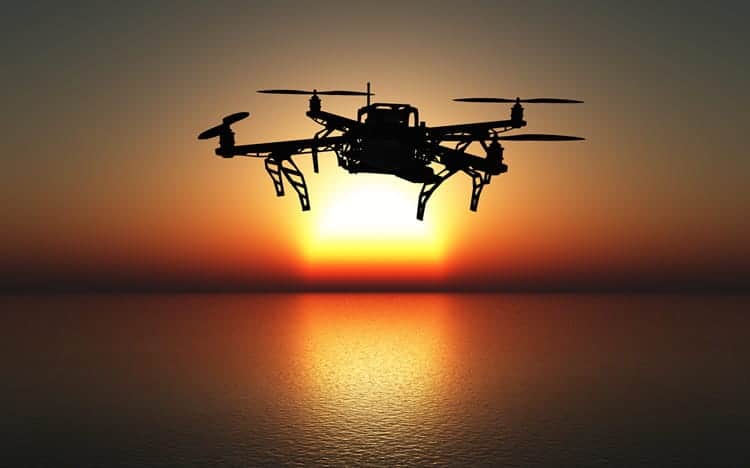
A military drone is an unmanned aerial vehicle (UAV) designed for defense applications such as surveillance, reconnaissance, combat operations, logistics resupply, and border monitoring. Unlike commercial drones, military platforms must operate under extreme conditions — high vibration, wide temperature ranges, electromagnetic interference, and extended mission durations.
A military drone is an electromechanical system. It combines mechanical structures, electrical engineering subsystems, and software into a single platform. The manufacturing demands that follow are equally broad — every material, component, and process must meet strict quality and traceability standards that go well beyond commercial requirements.
Why Military Drone Manufacturing Matters Now
The global military drone market was valued at $12.1 billion in 2024 and is projected to reach $22.4 billion by 2029 — growth of around 86%. Intelligence, surveillance, and reconnaissance (ISR) missions account for over 52% of demand, growing at a 15.2% compound annual growth rate.
Hybrid drones, which combine rotary and fixed-wing flight, are the fastest-growing platform type at 18.1% CAGR.
This growth is not just about designing new platforms. It is about manufacturing them — sourcing the right metals, plastics, electronics, wiring, and surface treatments at the quality level defense programs require.
Countries across North America, Asia-Pacific, and the Middle East are scaling production capacity. India alone signed a $3.5 billion deal for 30 MQ-9B long-endurance drones in late 2024.
Structural Metal Components
The airframe of a military drone relies on metals that combine strength with low weight. Aluminum, titanium, stainless steel, and copper are standard materials for structural frames, landing gear, engine mounts, actuator housings, and payload brackets.
These parts are produced through precision CNC machining — milling, turning, drilling, grinding, and electrical discharge machining (EDM). Tolerances are tight, and each part must be traceable to its raw material source. Sheet metal fabrication covers enclosures, heat shields, and mounting plates through laser cutting, bending, punching, and welding.
Plastic and Polymer Components
Not every drone component is metal. Housings, fairings, sensor enclosures, and non-structural covers are typically made from engineering plastics. Injection molding is the standard process for production volumes, working with materials such as ABS, polycarbonate, polypropylene, polyethylene, PVC, and polystyrene. Overmolding and multicavity tooling enable complex geometries and higher output.
For prototype and low-volume parts, vacuum casting offers a faster alternative. Polyurethane resins, silicone rubber, and epoxy resins are cast into silicone molds under vacuum to produce detailed, bubble-free components without the cost of production tooling.
Electronic Systems and PCBs
The electrical engineering side of a military drone includes flight controllers, navigation modules, communication transceivers, and sensor payloads. The foundation of these systems is the printed circuit board (PCB). Standard rigid PCBs handle most control and processing functions, while flex-PCBs fit into tight or moving areas where rigid boards cannot.
Military PCBs face stricter requirements than commercial ones. They must withstand vibration, thermal cycling, and electromagnetic interference. Material selection, layer count, and trace routing all need to account for the operating environment of the platform.
Cable and Harness Assemblies
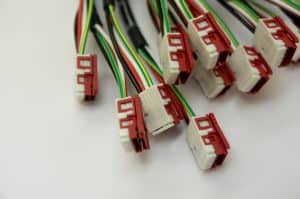
Cables and harnesses are the electromechanical backbone of the platform, connecting motors, sensors, controllers, power distribution, and communication modules into a unified system. Custom assemblies are built using copper and aluminum conductors with insulation materials matched to the application. PVC insulation covers standard connections. Teflon (PTFE) handles high-temperature zones near engines and power systems.
Harness design matters as much as material choice. Routing, shielding, and connector selection all affect signal integrity and electromagnetic compatibility — both critical in a military platform.
Power Systems
Power system design sits at the intersection of electrical engineering and mechanical integration. Rotary drones typically run on battery packs, while fixed-wing platforms may use gasoline engines capable of flights exceeding 15 hours. Both types require reliable power supply units and battery management systems that handle the demands of propulsion, avionics, sensors, and communication simultaneously.
Rapid Prototyping in Drone Development
Defense drone programs move through design iterations quickly. A concept that works in CAD needs physical validation before committing to production tooling. 3D printing produces functional test parts in days rather than weeks. Vacuum casting bridges the gap between 3D-printed prototypes and injection-molded production parts, offering near-production-quality components in small quantities.
Surface Finishing and Protection
Drone components exposed to outdoor and operational environments require surface treatment. Anodizing provides corrosion resistance for aluminum parts. Zinc and nickel plating add durability to metal surfaces. Powder painting delivers uniform protective coatings across a range of materials. The choice of finish depends on the component’s exposure to moisture, salt, UV, temperature extremes, and mechanical wear.
Quality Standards in Military Manufacturing
Commercial manufacturing follows ISO 9001 for quality management. Military and aerospace manufacturing adds AS9100, which extends ISO 9001 with requirements for full material traceability, configuration control, risk management, and process validation. Defense procurement agencies require AS9100 compliance so that every component in a military platform can be traced from raw material through each production step to final inspection.
In practice, this means a CNC-machined bracket must carry documentation linking it to a specific material heat lot. A PCB must have traceable solder paste, reflow profiles, and inspection records. Without this documentation chain, components cannot enter a military program.
Admati Agencies – A Comprehensive Manufacturing Partner for Drone Programs
Every section of this article describes a different manufacturing discipline — from mechanical structures and plastics to electrical engineering, electromechanical assemblies, and surface finishing. At Admati Agencies, we provide all of them under one roof.
Our capabilities include precision CNC machining in aluminum, steel, titanium, and copper; sheet metal fabrication including laser cutting, bending, and welding; injection molding and vacuum casting for plastic components; rigid and flex-PCB fabrication; custom cable and harness assembly; and 3D printing for rapid prototyping.
We also supply batteries, power supplies, springs, magnets, connectors, and surface finishing services including anodizing, zinc and nickel plating, and powder painting. This means a defense contractor or integrator working on a drone program can source the full range of required components through a single partner.
We hold ISO certification and support projects from initial prototyping through full-scale production. For companies that need a complete supply chain for military-grade drone manufacturing, Admati Agencies offers that solution.
Questions and Answers About Military Drone Manufacturing
What materials are used in military drone manufacturing?
Structural components use aluminum, titanium, stainless steel, and copper. Plastic parts are molded from ABS, polycarbonate, polypropylene, and similar engineering polymers. Electronics rely on rigid and flexible PCBs. Wiring uses copper conductors with PVC or Teflon insulation.
What is AS9100?
AS9100 is the quality management standard for aerospace and defense manufacturing, built on ISO 9001 with additional requirements for traceability, configuration control, and process validation. It ensures every component can be documented from raw material through final inspection.
How large is the military drone market?
The global military drone market reached $12.1 billion in 2024, with projections of $22.4 billion by 2029. ISR applications account for over 52% of demand.
What manufacturing processes are involved in building drones?
CNC machining, sheet metal fabrication, injection molding, vacuum casting, PCB fabrication, cable and harness assembly, 3D printing, and surface finishing such as anodizing and plating.
What is the difference between prototyping and production manufacturing?
Prototyping uses 3D printing and vacuum casting to produce small quantities of parts quickly for design validation. Production manufacturing uses CNC machining and injection molding for high-volume, repeatable output with full quality documentation.
How do you select a manufacturing partner for a drone program?
Look for a partner that covers the full range of required processes — CNC machining, plastics, PCBs, wiring, finishing — under one roof. Verify their quality certifications, defense experience, and ability to scale from prototype to production.
More News Articles