

News
 Back to news
Types of Sheet Metal Bending Machines
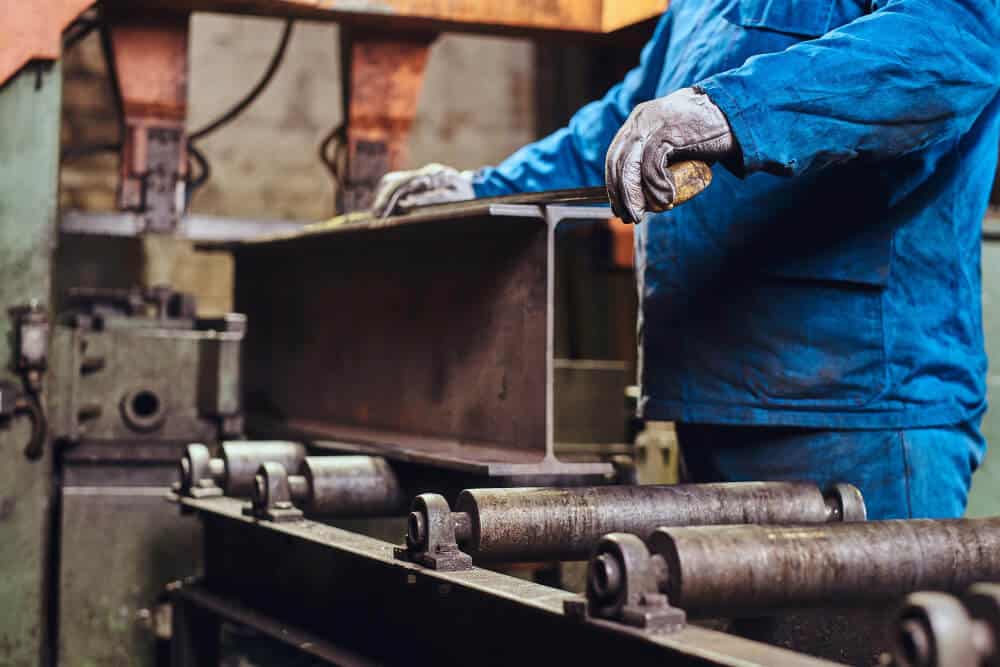
Choosing a sheet metal bending machine is a critical decision that directly affects the quality of the product, work pace, and costs of any production project.
In the worlds of engineering, development, and manufacturing, proper alignment of the bending machine to the specific needs of each task can make the difference between precision and waste, between efficient production and repeated failures.
Engineers, production line managers, and product planners are required to examine not only the type of machine, but also the material, shape, sensitivity to precision, and volume of work.
Manual Sheet Metal Bending Machines
Manual bending machines are the most basic and accessible solution for processing sheet metal. They operate on a simple manually-operated mechanism (usually with a handle or lever) and are composed of a workbench, upper blade, and lower jaw, which together perform the bending operation. The machine allows setting the bending angle as needed but requires user skill and precision in manual operation.
Thanks to their simple structure, these machines are particularly suitable for small workshops, spot repairs, or low-volume production that requires full control over every action.
Advantages:
-
Low purchase and maintenance costs.
-
Simple operation – no advanced technical knowledge required.
-
Suitable for spot work or for producing initial prototypes.
Limitations:
-
Limited bending force – not suitable for processing thick sheets or hard materials.
-
Lower precision compared to automatic machines.
-
Not suitable for serial production or high volumes.
Electric Sheet Metal Bending Machines
Electric bending machines are a step above manual ones, both in performance and automation. They are operated by electric motors that perform the bending movement with high precision and without requiring physical force from the user. Advanced control systems allow adjusting the bending depth and operating speed, and setting precise angles – all at the push of a button.
The main advantage of these machines is the ability to work with relatively high speed and accuracy, saving work time and improving product uniformity. They are well-suited for mid-scale projects, such as small to medium product series, precise engineering models, or development parts.
Advantages:
-
Higher work speed than manual machines.
-
Precise control over bending angle and depth.
-
Suitable for recurring projects or small production series.
Limitations:
-
Requires a constant power source and suitable operating conditions.
-
Bending force still limited compared to hydraulic systems.
-
Less efficient for heavy production or processing of very thick sheets.
Hydraulic Sheet Metal Bending Machines
When serious force is required, hydraulic bending machines meet all needs. They are based on hydraulic pistons driven by oil pressure. The pressure is converted into strong, precise force that allows bending even very thick sheets (hard steels, industrial aluminum, and composite materials) without sacrificing control.
The system enables control over bending depth and angle, while applying uniform pressure along the entire line. It is tailored for industrial work environments where volumes are large, conditions vary, and the material requires uncompromising precise processing.
Advantages:
-
Very high bending force – suitable for thick sheets or hard materials.
-
Precision in work even under high loads.
-
Tailored for heavy industries: automotive, energy, infrastructure, etc.
Limitations:
-
Relatively high purchase and maintenance costs.
-
Requires skill in operation and understanding of hydraulic systems.
-
Requires a suitable workspace – significant weight and size.
CNC Bending Machines – Advanced Technology
Sheet metal bending using CNC (Computer Numerical Control) technology is the next generation of metal processing. The process is smart, precise, and automatic, thanks to a computerized controller that allows pre-programming the bending operation: angle, depth, sequence of operations, and even tool type.
Every operation is executed based on a digital code that ensures high repeatability, precise products, and near-error-free operation.
CNC machines come in various configurations (manual, electric, hydraulic) but the computerized control is what makes them ideal for serial production, precise work, or highly customized complex projects.
Advantages:
-
Very high precision – even with complex angles or repeat bends.
-
Full automation – saves time and labor.
-
Capability to program complex operations and create accurate production series.
Limitations:
-
Higher machine cost.
-
Requires technical knowledge for operation, programming, and maintenance.
-
Less cost-effective for one-time production or very small series.
Criteria for Choosing the Right Machine
Every manufacturer, engineer, or technician must match the machine to the precise needs of the product, type of work, and production conditions. An incorrect decision may lead to accelerated wear, inaccurate products, or a waste of time and money.
Main criteria to consider:
-
Sheet thickness – the thicker the sheet, the higher the bending force required (typically hydraulic or CNC).
-
Material type – hard or sensitive materials require precise force and accuracy alignment.
-
Production volumes – serial production requires automation, as opposed to spot production where a manual or electric machine may suffice.
-
Required precision level – delicate or engineering work requires machines with precise control (preferably CNC).
-
Available budget – there are significant cost gaps between solutions, which should be considered against operational needs.
-
Workspace and infrastructure availability – large or hydraulic machines require an adapted work environment.
Correct selection starts with a precise definition of the requirements and ends with a thoughtful match between machine and project.
Admati – Expertise in Advanced Sheet Metal Bending Solutions
At Admati, we specialize in complex sheet metal bending processes. For years we’ve been working with industries that set the highest standards: aerospace, defense, medical, construction, and electronics.
Thanks to advanced equipment, a skilled team, and proven experience in complex engineering projects, we provide precise solutions – from prototypes to full production runs.
Our process is managed end-to-end: from engineering design, through laser cutting and CNC bending, to finishing, painting, and top-level quality control. Every stage is performed under international quality standards, with strict adherence to timelines and no compromise on specification compliance.
We’re here to help engineers, developers, and project managers bring ideas to life exactly as planned – quickly, accurately, and without unnecessary delays.
More News Articles